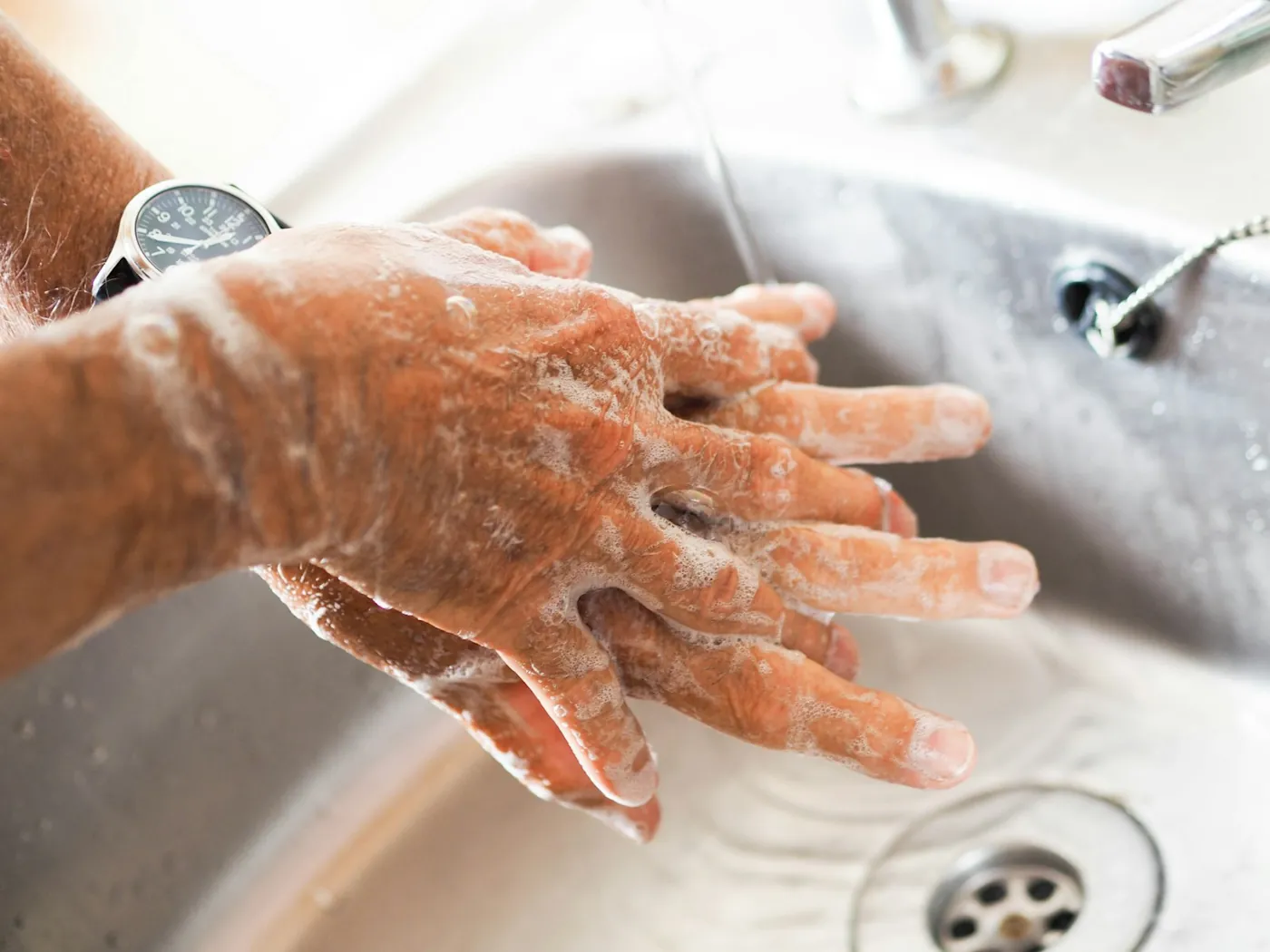
AI will not wash your hands
Digital surveillance and AI can make infection prevention faster and sharper. They cannot make it happen. Here is what has to be true first.


Draft for Małgorzata’s review before publication · opinion piece
Every few months someone shows a hospital a dashboard that promises to predict the next outbreak. Some of these tools are genuinely good. But after seventeen years in hospital hygiene, I have learned to ask one question before any other: when the alert fires, who gets up and does something?
A tool sits on top of a system
Think of infection prevention as layers. At the bottom is ward practice: water, air, surfaces, devices and hands. Above it is data: sampling, audits, microbiology, checklists. Above that are digital systems that bring the data together. AI and decision support sit at the very top.
Each layer depends on the one below. An algorithm trained on patchy sampling learns the patches. A dashboard fed by audits nobody trusts becomes wallpaper. The order matters.
AI is an amplifier. It makes a good system faster and a weak one confidently wrong.
What we learned building surveillance by hand
When our hospital hygiene unit built a proactive surveillance model for water, food and surfaces, the value did not come from the laboratory alone. It came from a planned phase before sampling and a structured phase after the result: who reads it, who acts, how fast. Over five years that system handled 1,470 samples and 539 reports. Any digital tool worth buying should make those two phases stronger, not skip them.
People are still the last metre
In our hospital-wide hand hygiene survey, staff answered knowledge questions correctly 74.4% of the time on average, yet only 30.4% got the question on hand rubbing versus washing right. A camera or sensor can count hand-hygiene events. It cannot explain why someone believes the wrong thing. That still takes training and feedback.
Five questions before you buy
- What decision will this tool change, and who makes it?
- Is our data good enough today, or are we automating guesswork?
- Who acts on an alert, within what time, and how do we check it worked?
- How will staff experience it: as support, or as surveillance of them?
- What will we stop doing manually, and what must we keep doing by hand?
I am optimistic about digital infection prevention. The hospitals that will get the most from it are the ones that treat it as the top layer of a system they already run well.
Want this to work in your hospital?
I run workshops and talks that turn findings like these into routines that last.